
WorkRemit helps businesses hire, pay and look after their people across borders, and helps the agencies that run payroll and employment for other companies do it at scale.
Payroll looks simple from the outside: pay the right people the right amount on the right day. In practice it is a chain of fragile steps, from salary structures, tax and deductions to approvals, bank payouts, statutory remittances and the paperwork that proves it all happened. Most teams I spoke to were holding it together with spreadsheets, bank portals and a lot of manual checking.
I designed WorkRemit's first version end to end, and designed the platform it grew into: an HR and super admin workspace for the people who run payroll, and an employee portal and mobile app for the people being paid.
From spreadsheets to a pay run
The first version had one job: make a pay run feel safe. I designed onboarding for a business and its employees, salary and deduction set-up, the pay run itself with a clear review step before any money moves, and payslips and payment history employees could check on their own.
One workspace to run a global team
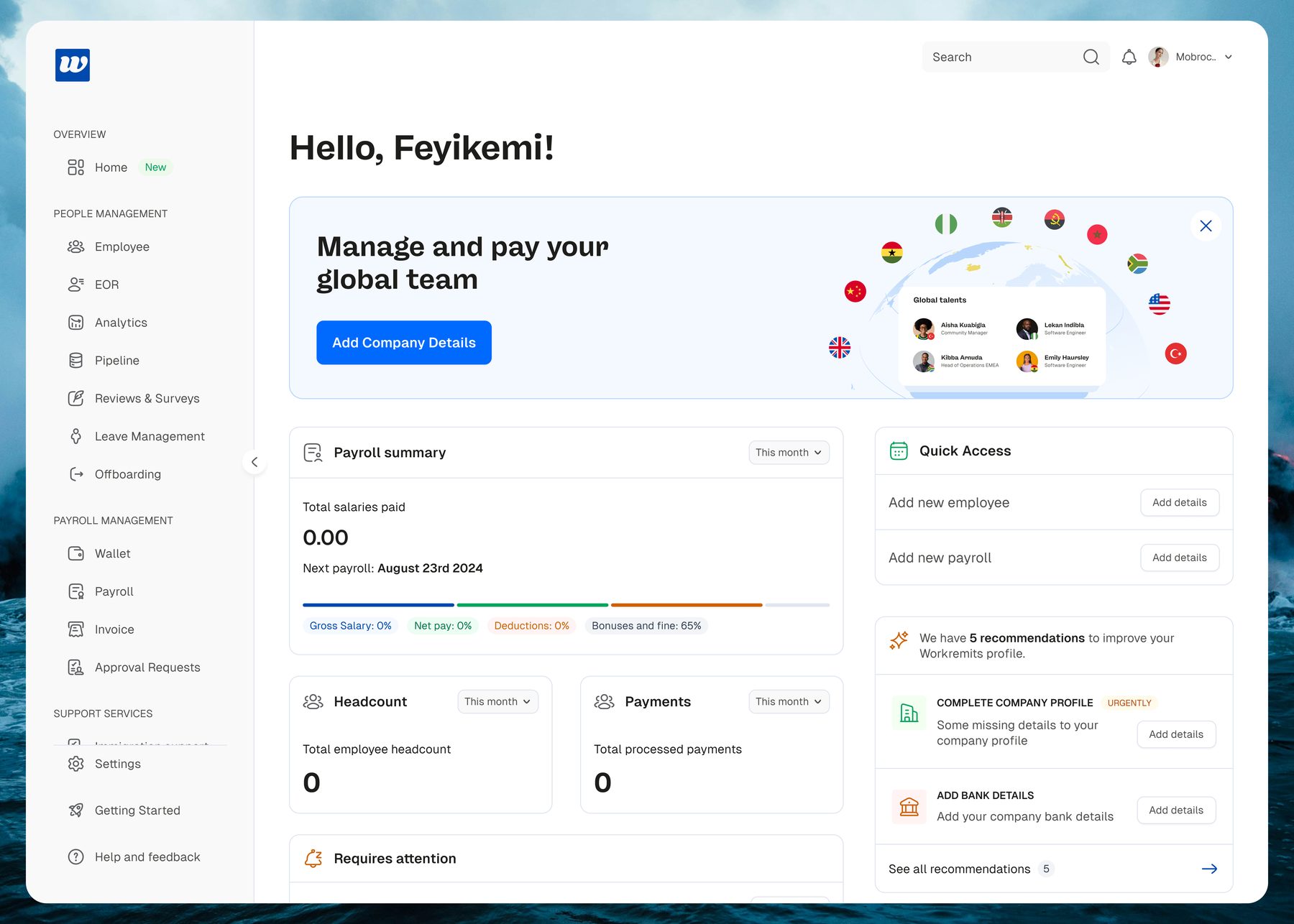
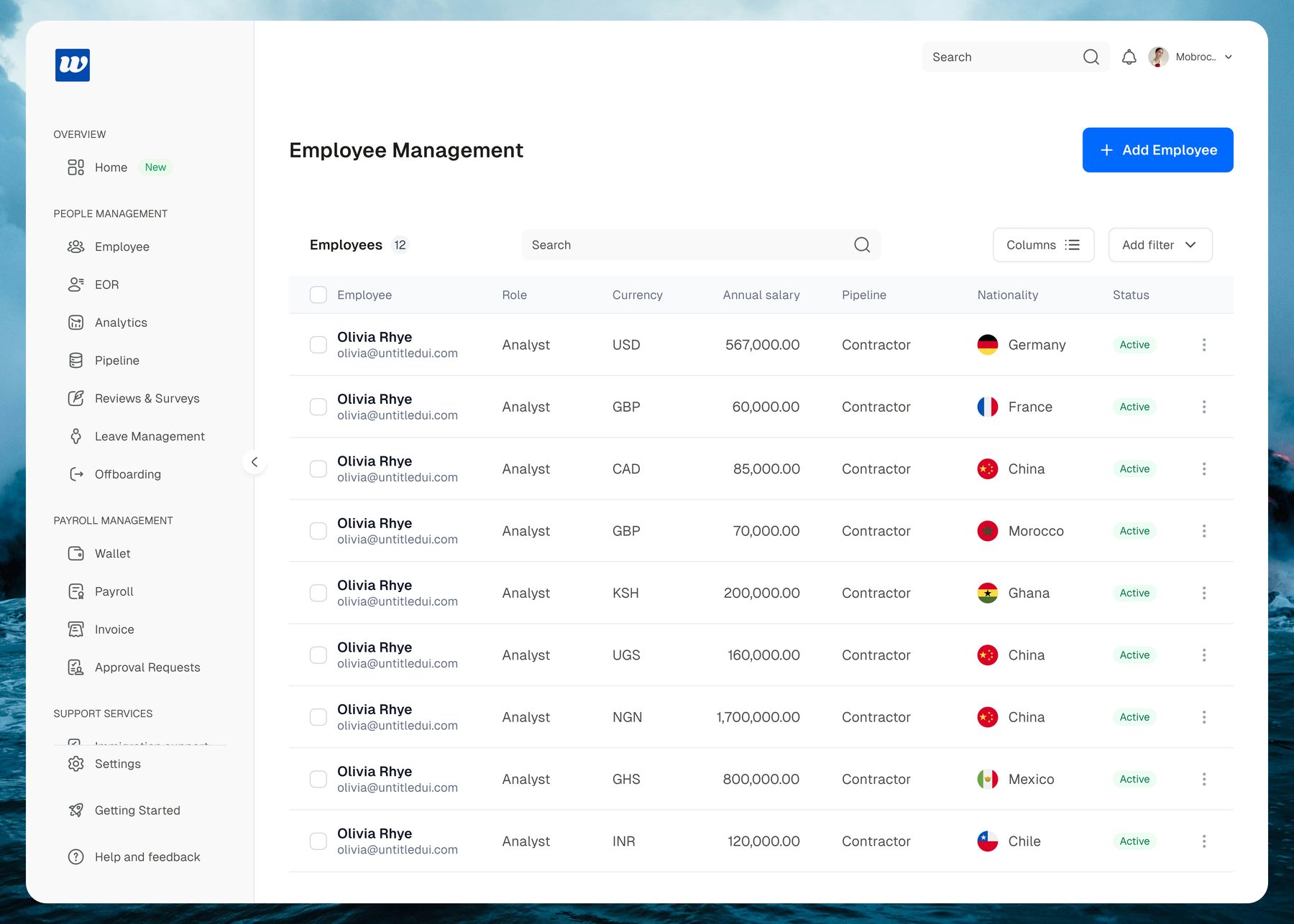
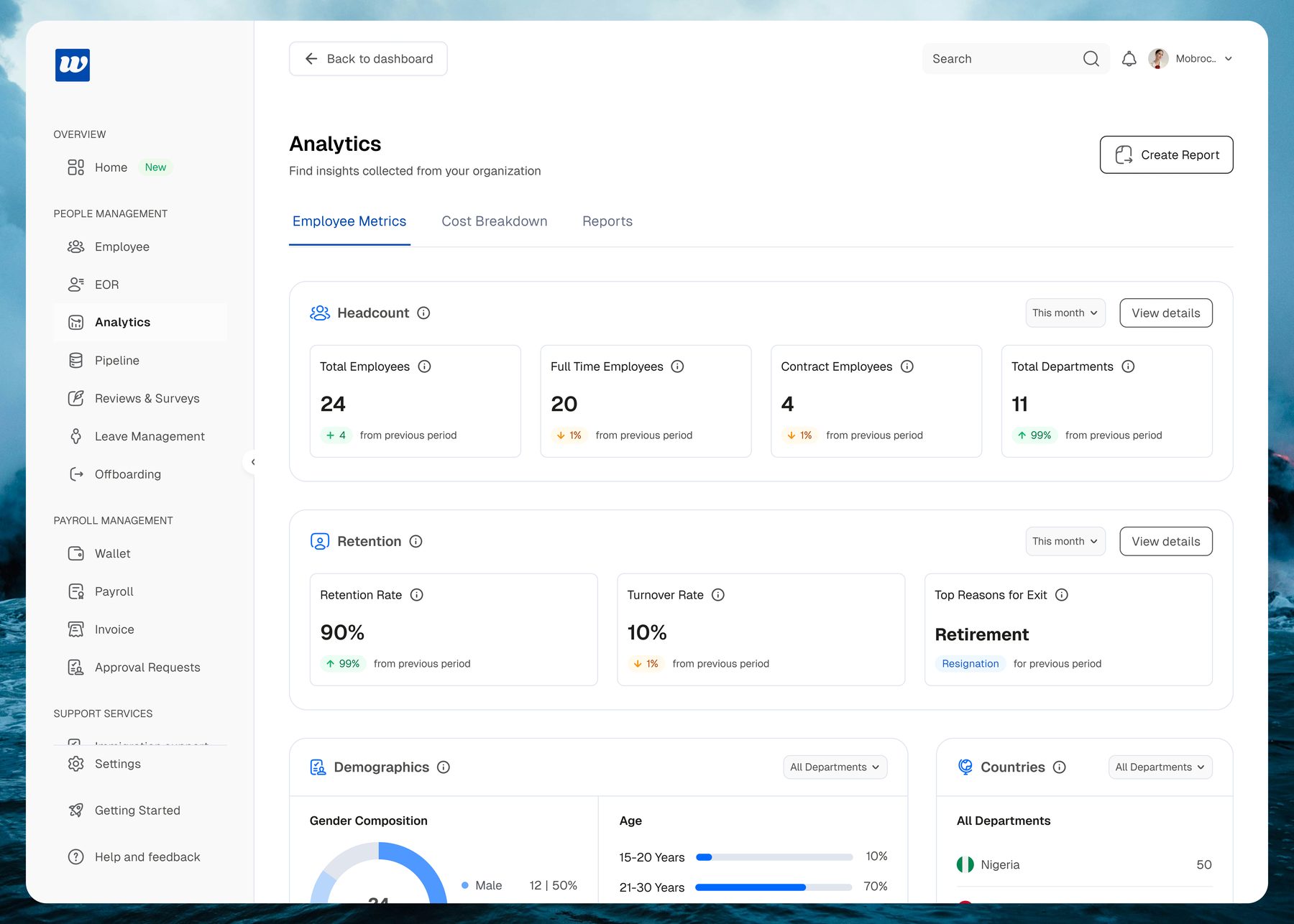
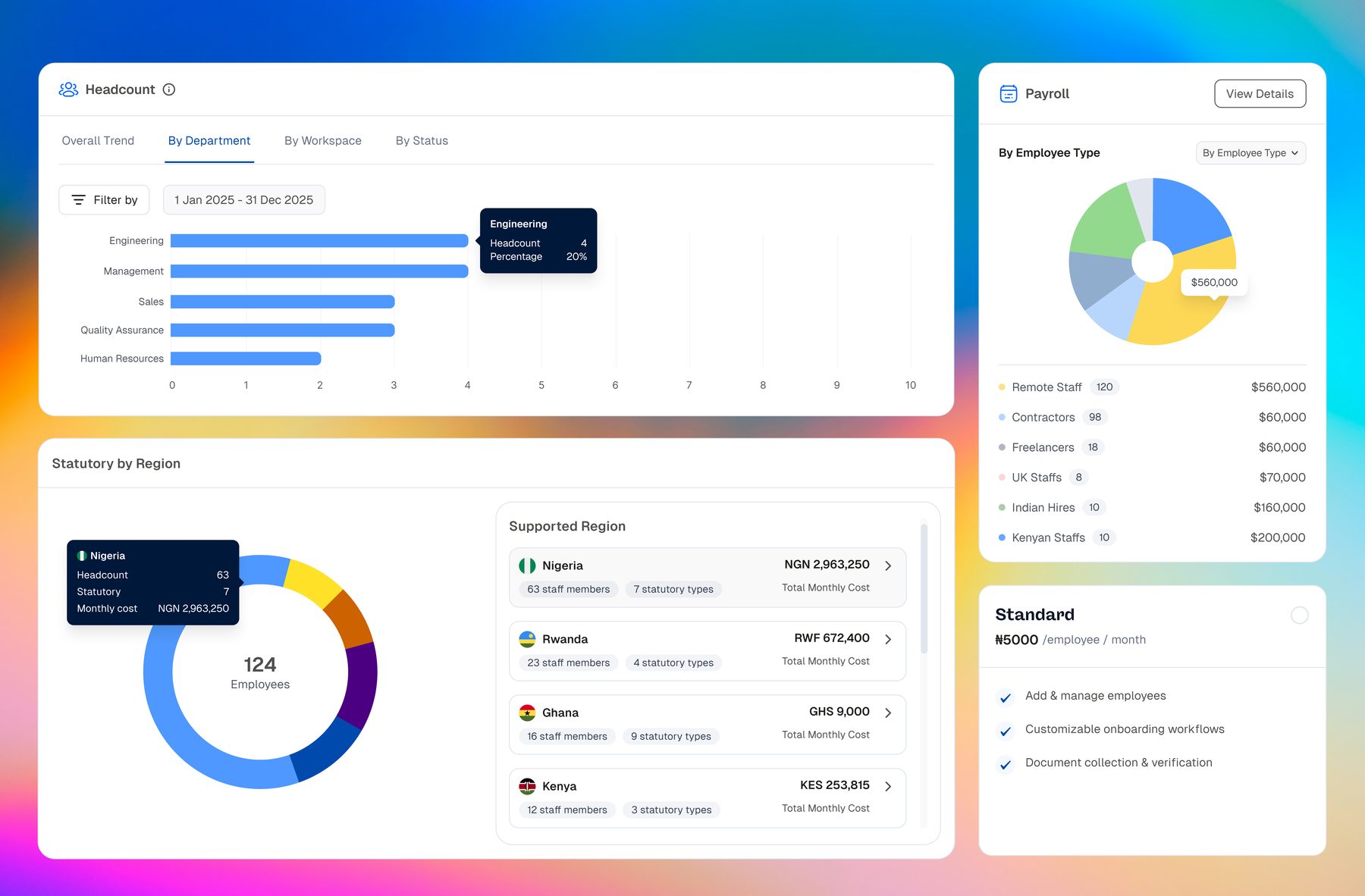
The HR and super admin platform is where companies and agencies manage everyone they employ, in any country. It brings employees, contracts, payroll, analytics and statutory obligations into one place, with a home screen that shows what needs attention before it becomes a problem.
Payroll and compliance, done properly
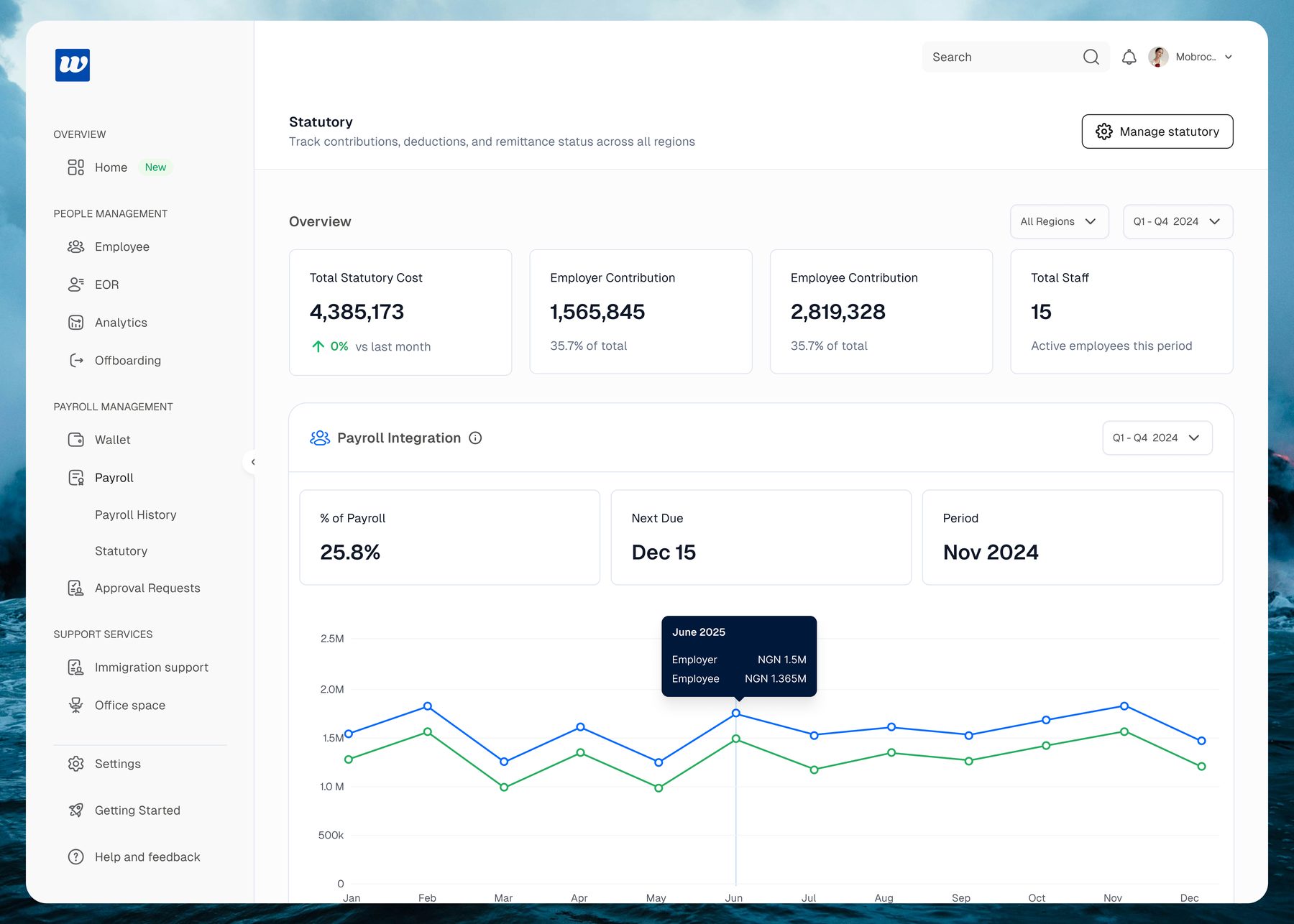
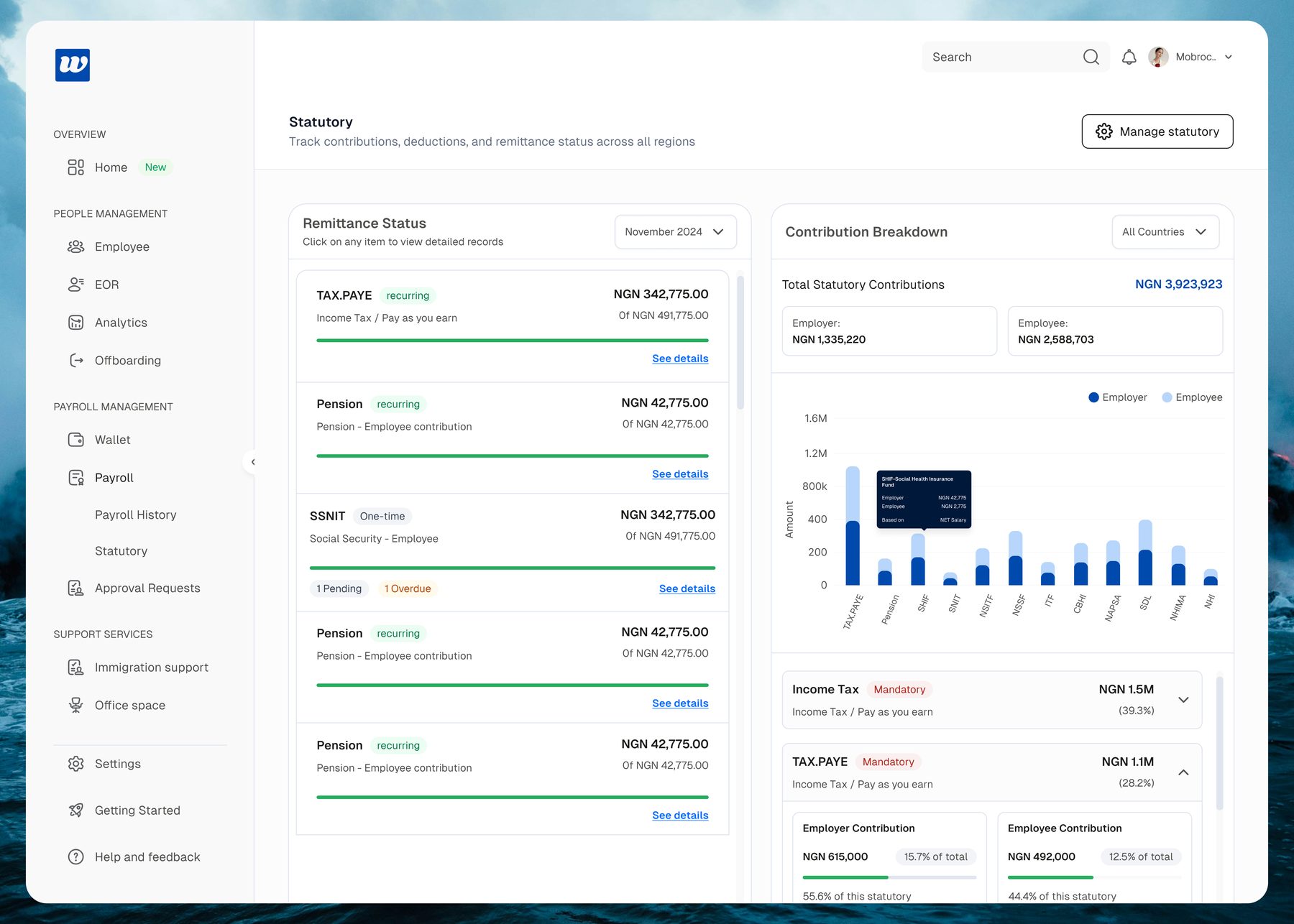
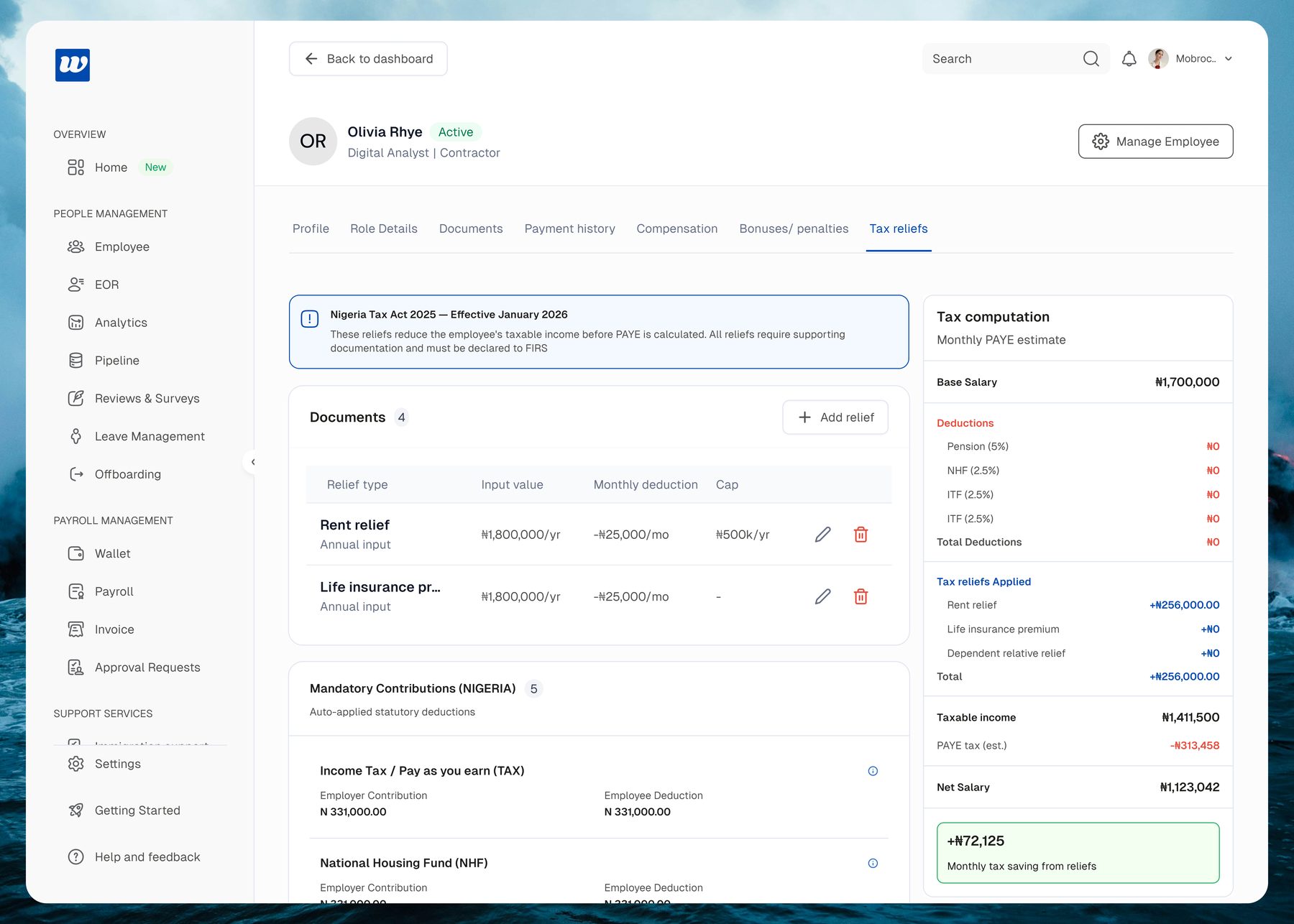
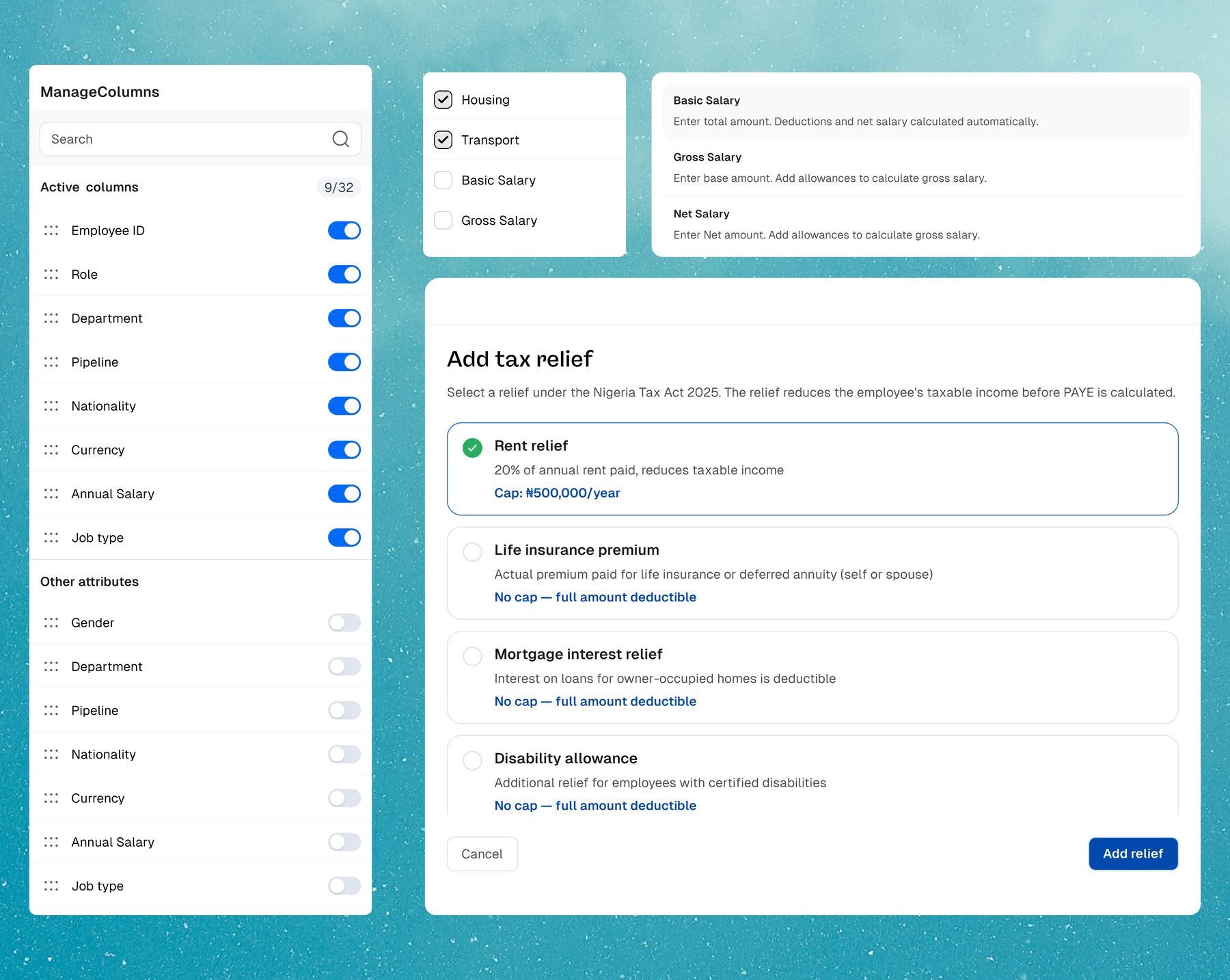
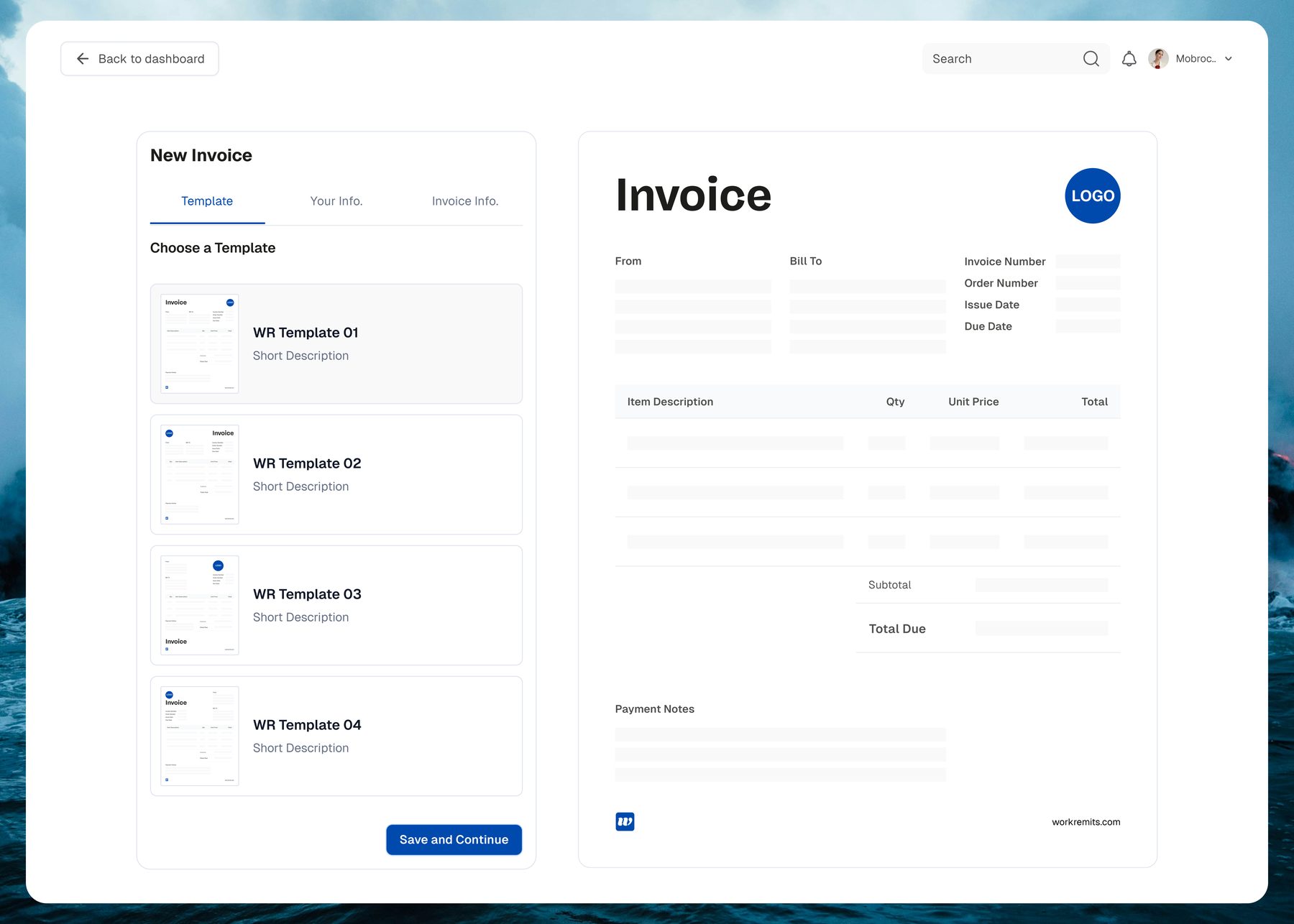
Every country has its own taxes, contributions and deadlines. I designed statutory remittance tracking per region, a tax computation view that shows exactly how each employee's take-home pay is worked out, reliefs that follow the Nigeria Tax Act 2025, and invoicing built from reusable templates.
Support for moving and growing teams
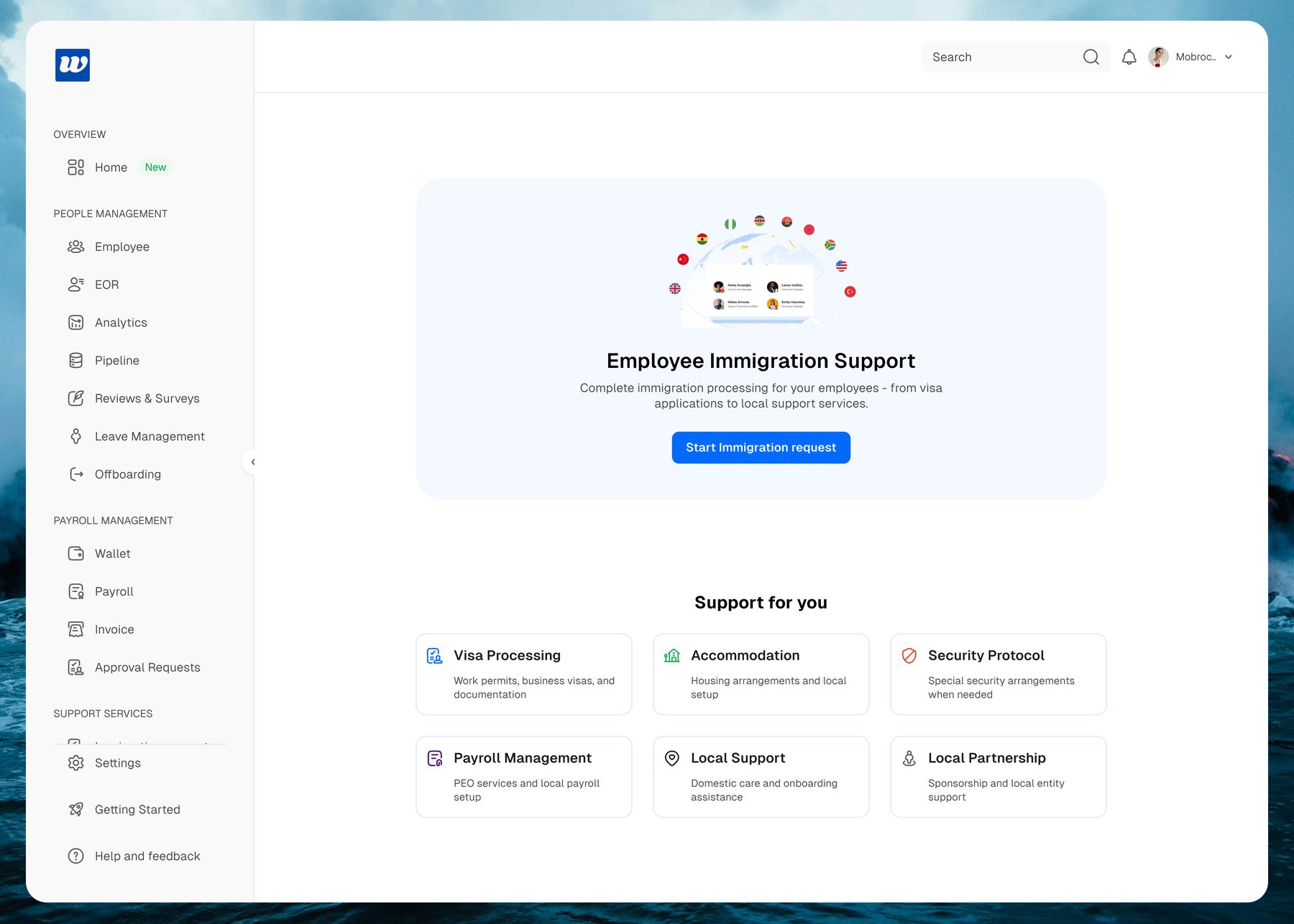
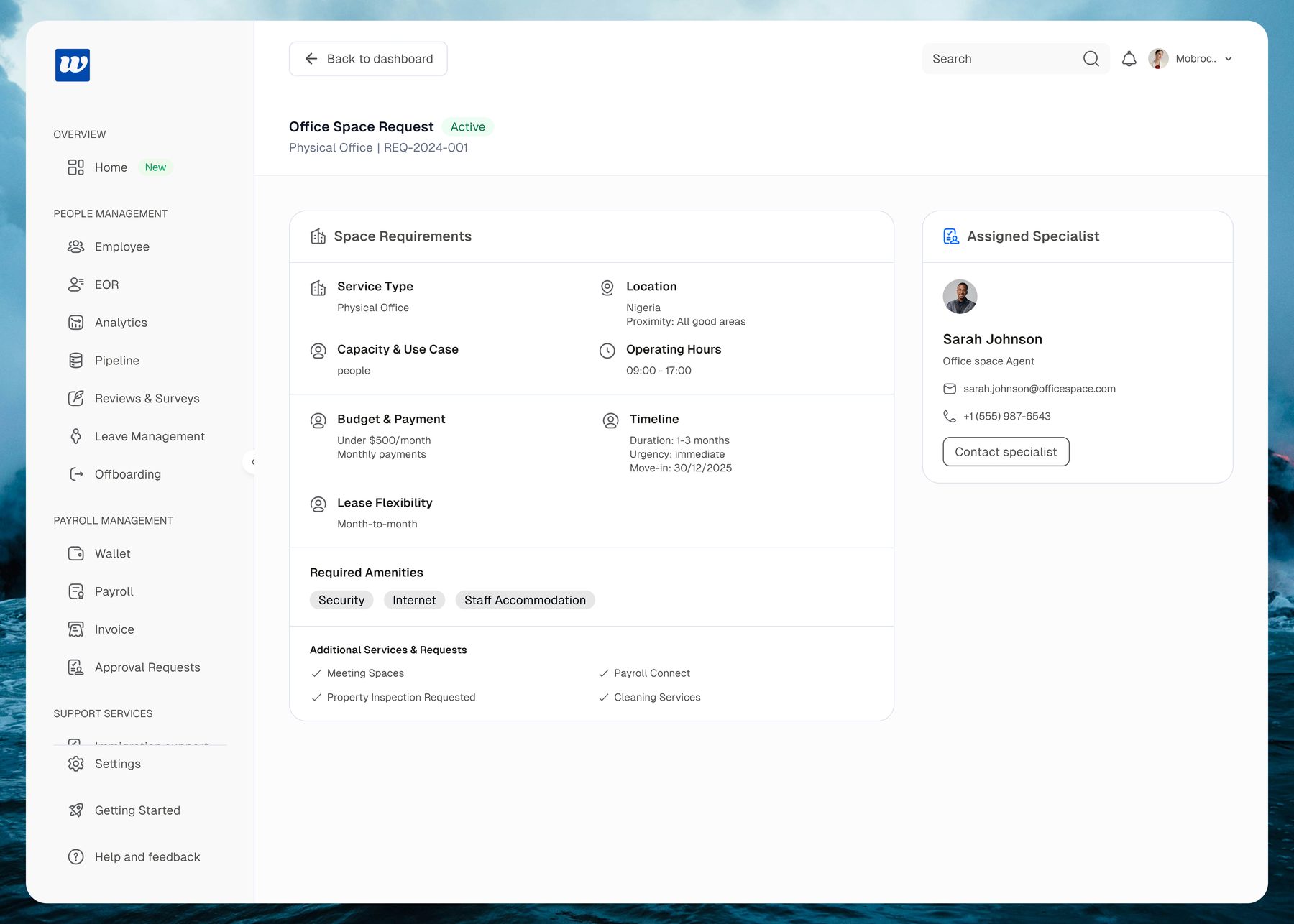
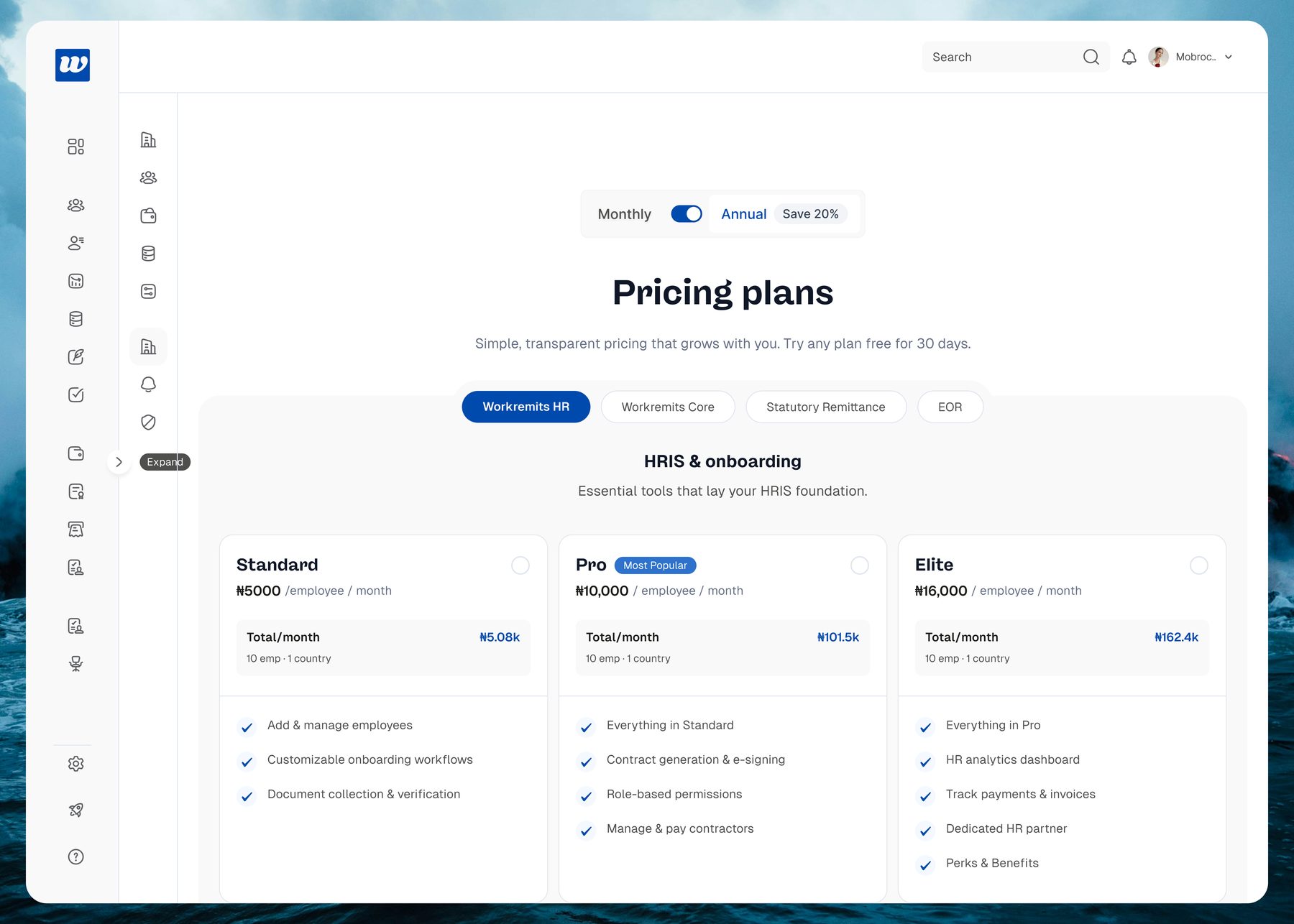
Employing people abroad means more than paying them. Companies can request immigration support, office space and local help from the same platform, and choose a plan that fits the size of their team.
Pay, payslips and contracts, in one place for employees
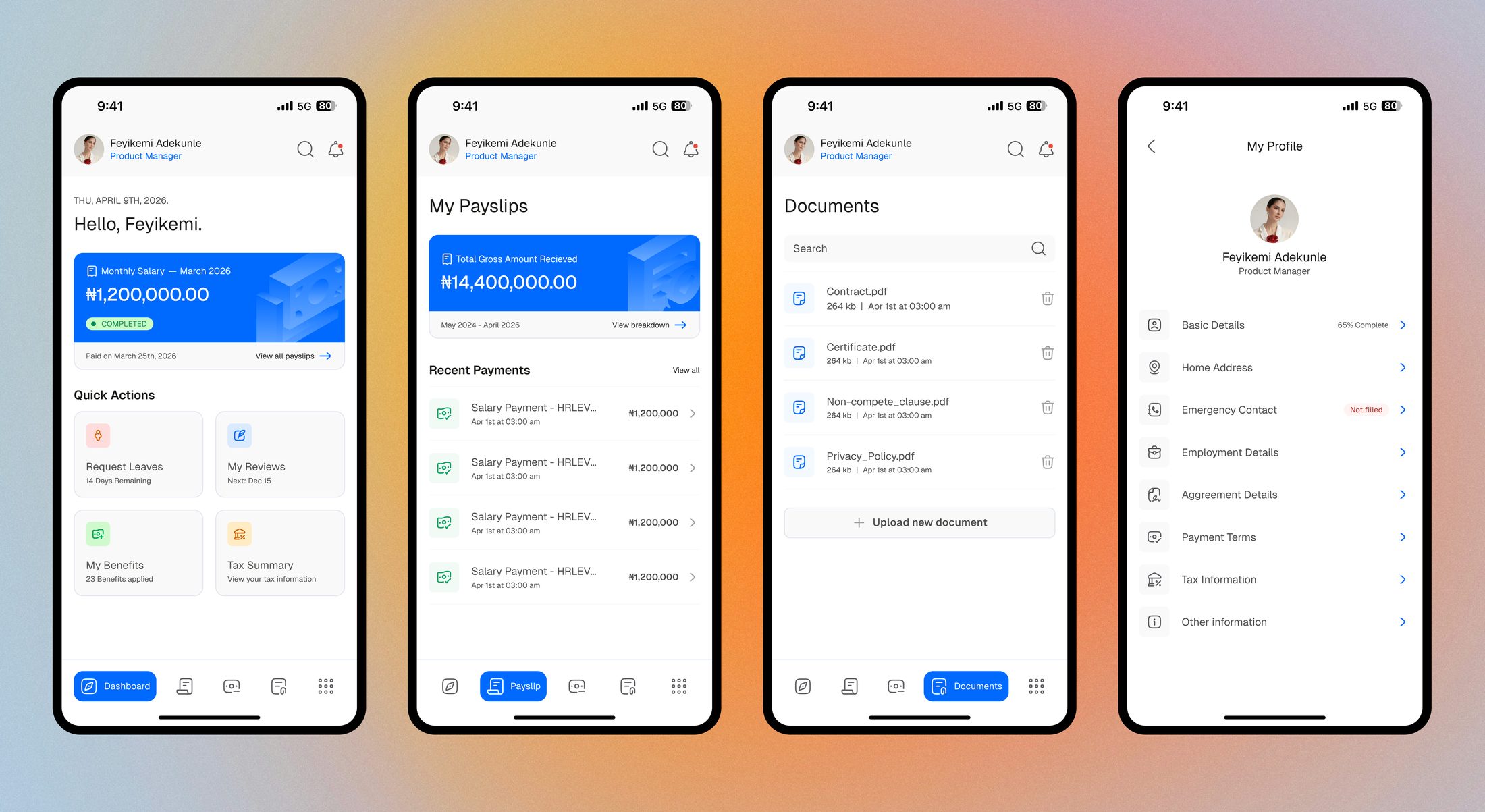
The people being paid deserve the same clarity as the people paying them. Every employee gets a portal on the web and a mobile app for their salary, payslips, documents and profile, so they can check what they earned, download proof of income and update their details without emailing HR.
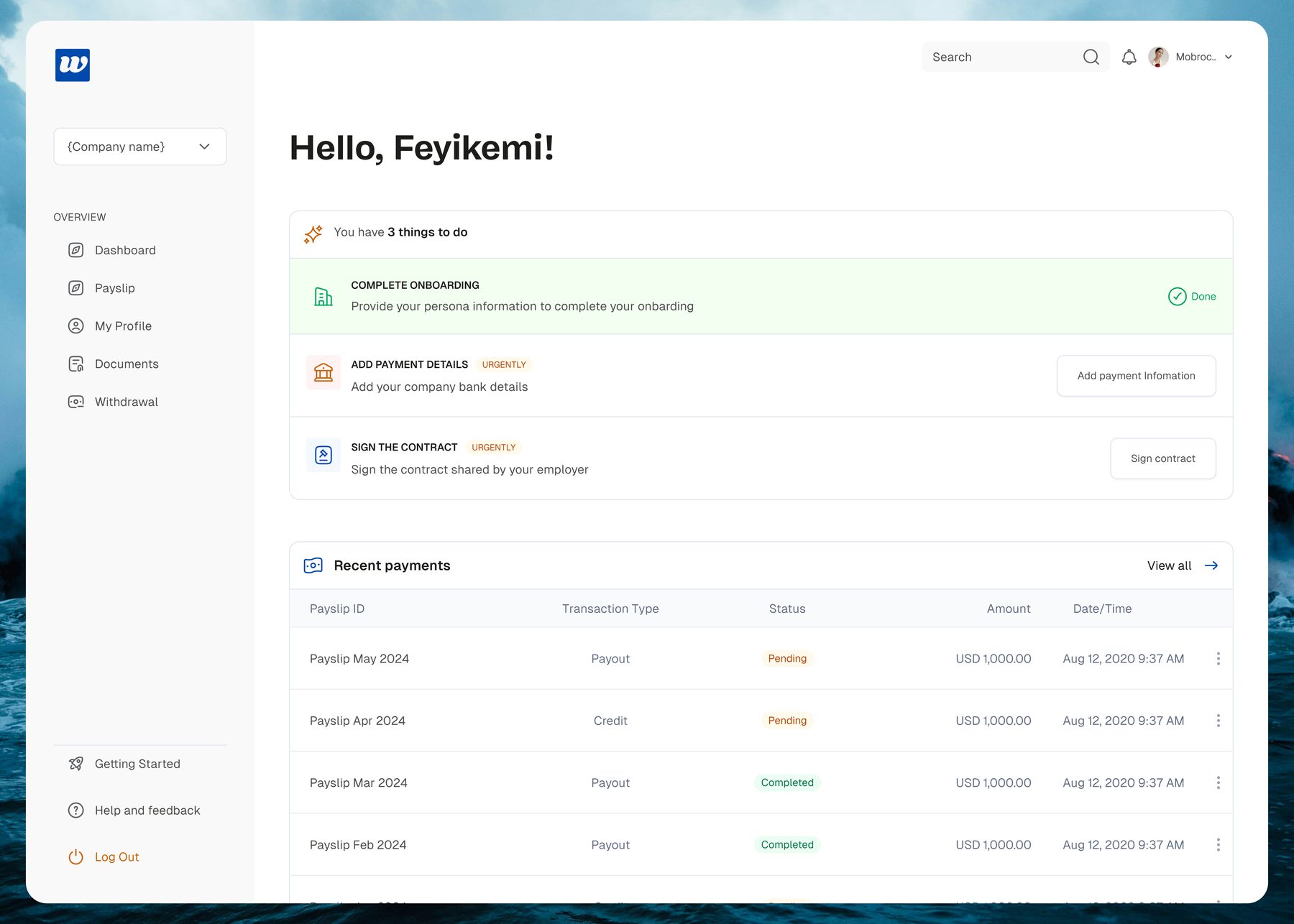
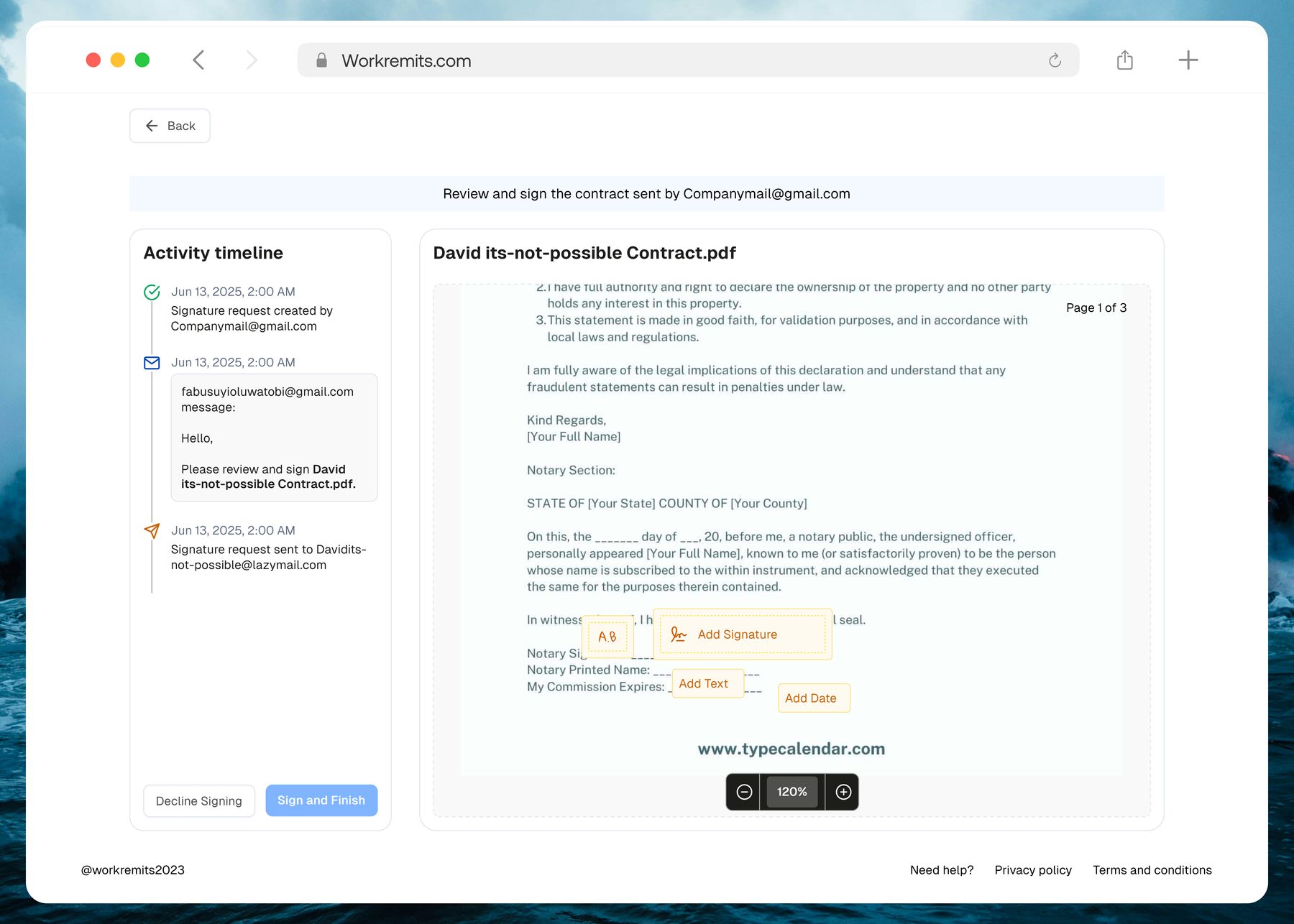
On the web, the dashboard opens with a short to-do list (finish onboarding, add payment details, sign your contract) and recent payments underneath. Contracts are reviewed and signed in the browser, with an activity timeline showing who sent what and when. The mobile app keeps the essentials one tap away: balance and next pay date up top, recent payslips, documents and profile.
The view from the operations team
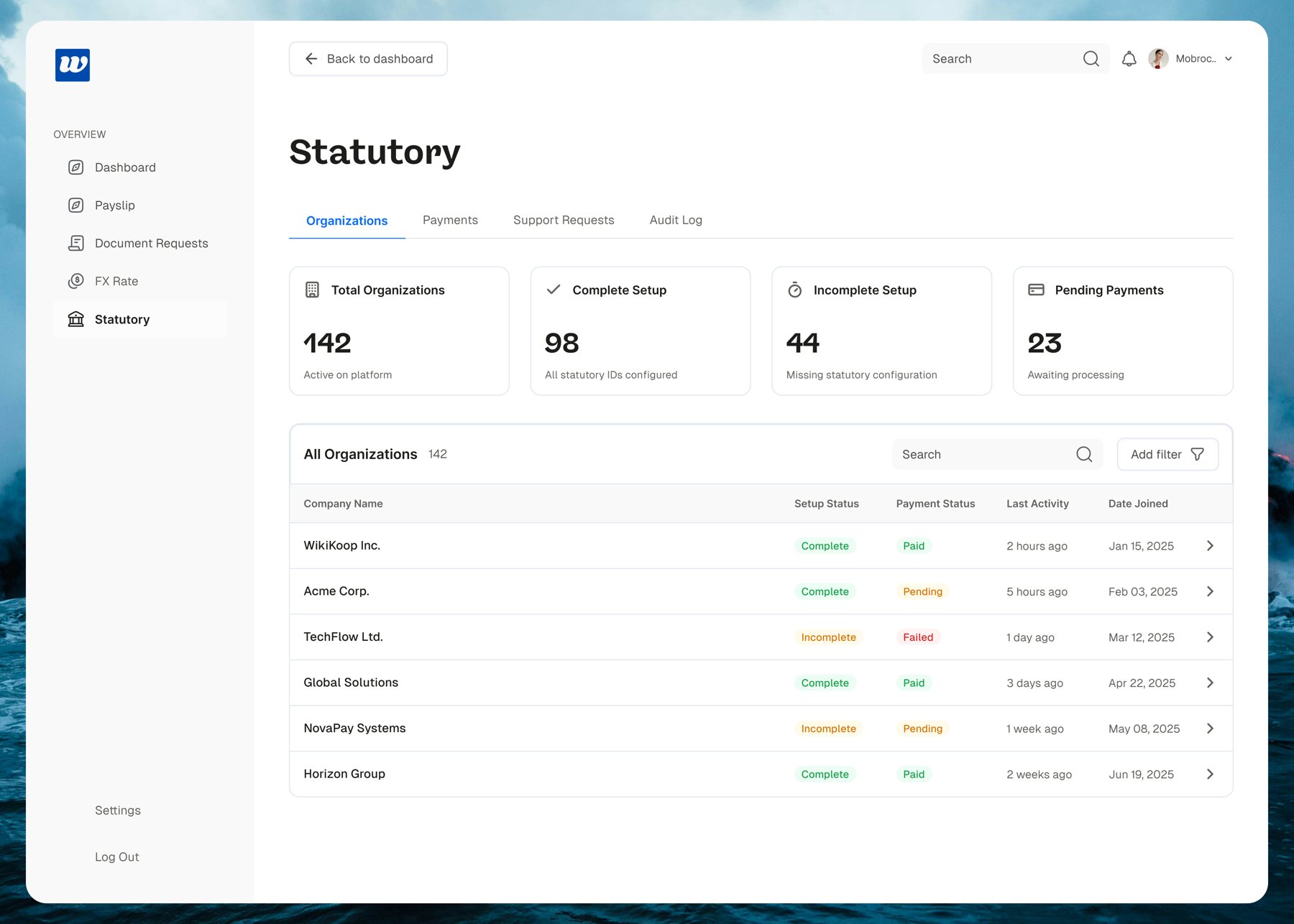
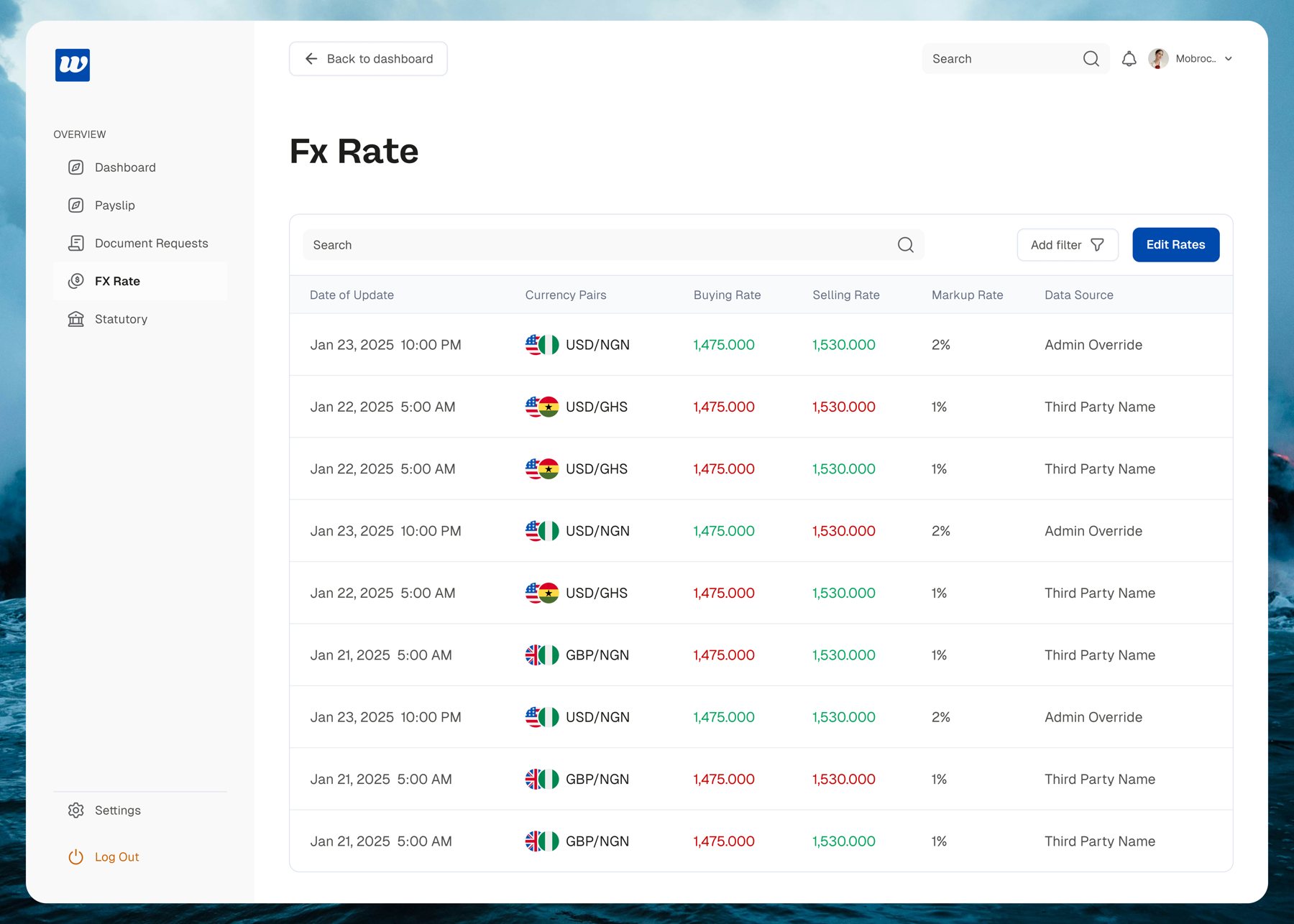
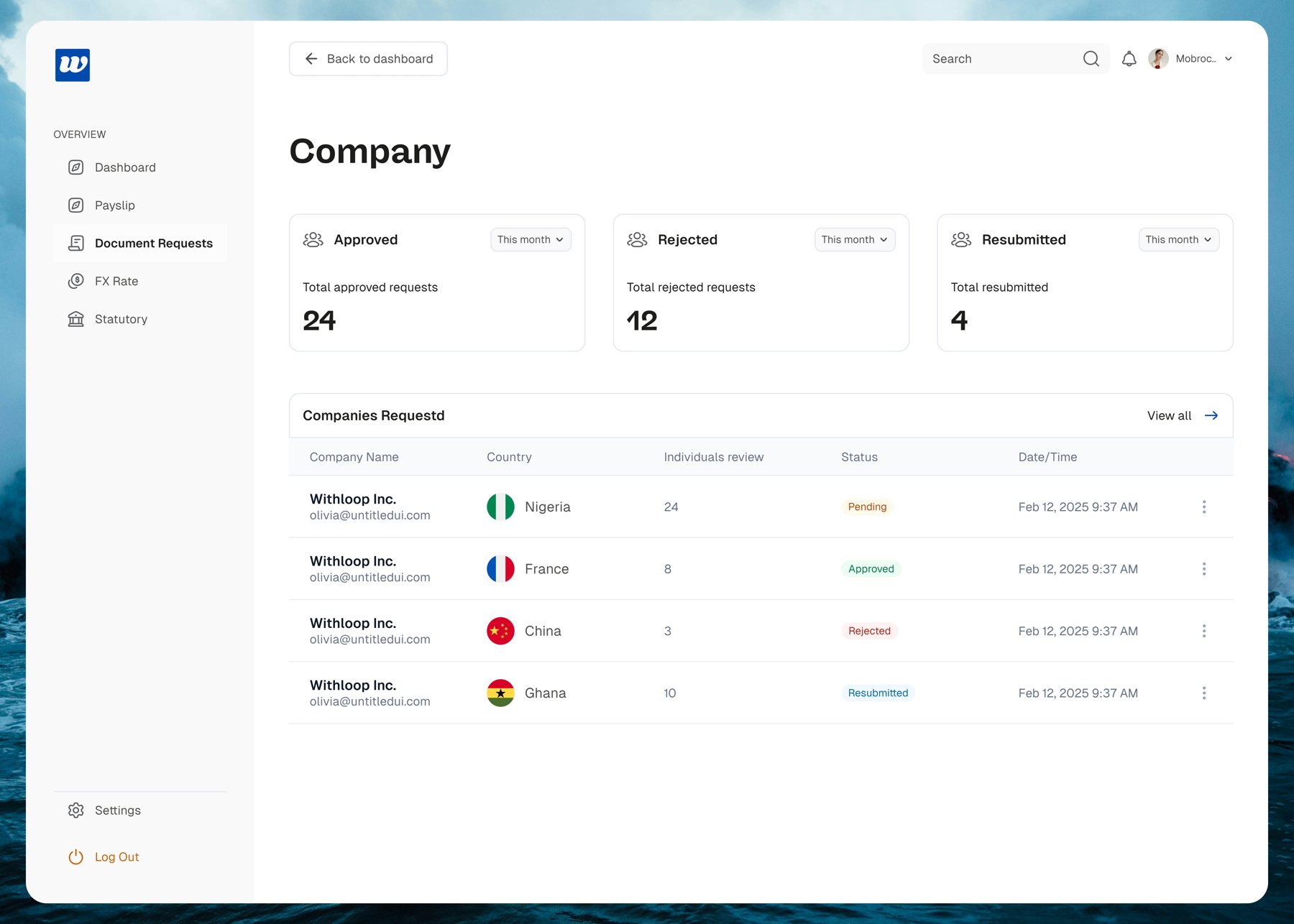
Behind every company on WorkRemit is our own operations team, and they needed a console of their own. I designed the super admin platform they use to keep every account healthy: statutory set-up and payments across all organisations, with the ones missing configuration or waiting on payment surfaced first; FX rates per currency pair, with a clear record of whether a rate came from a provider or a manual override; and document requests that can be approved, rejected or sent back for resubmission.
Telling people what matters, when it matters
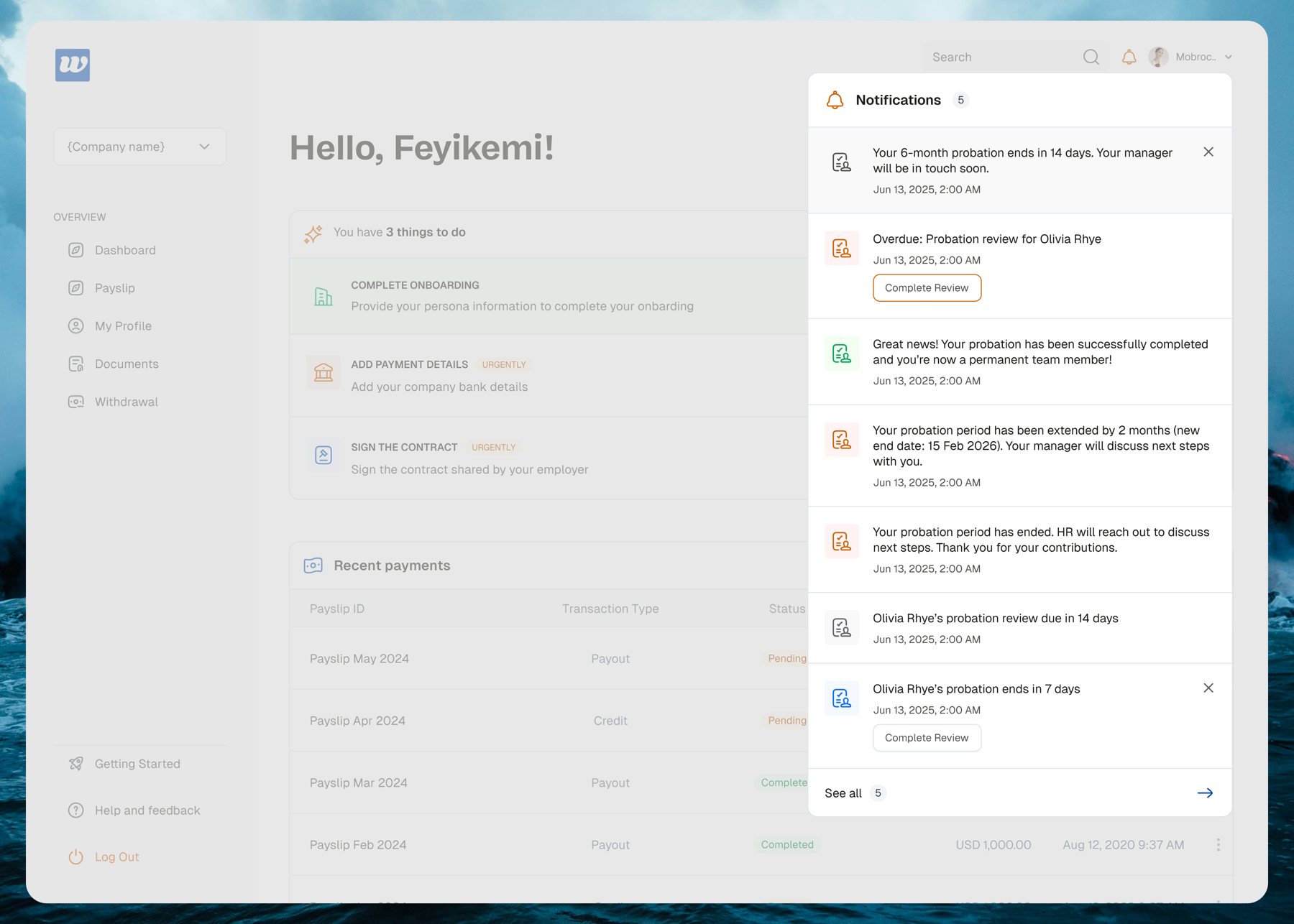
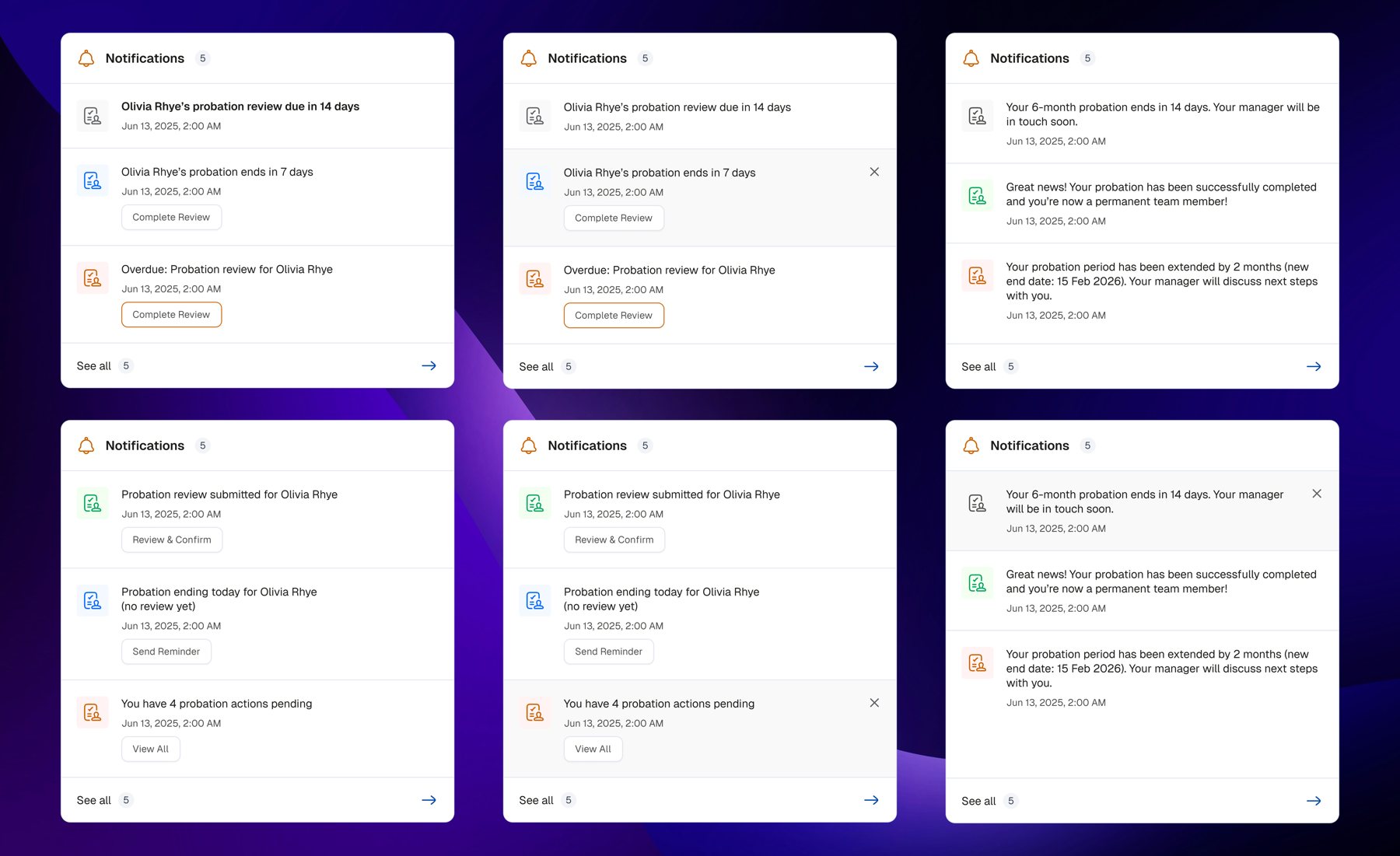
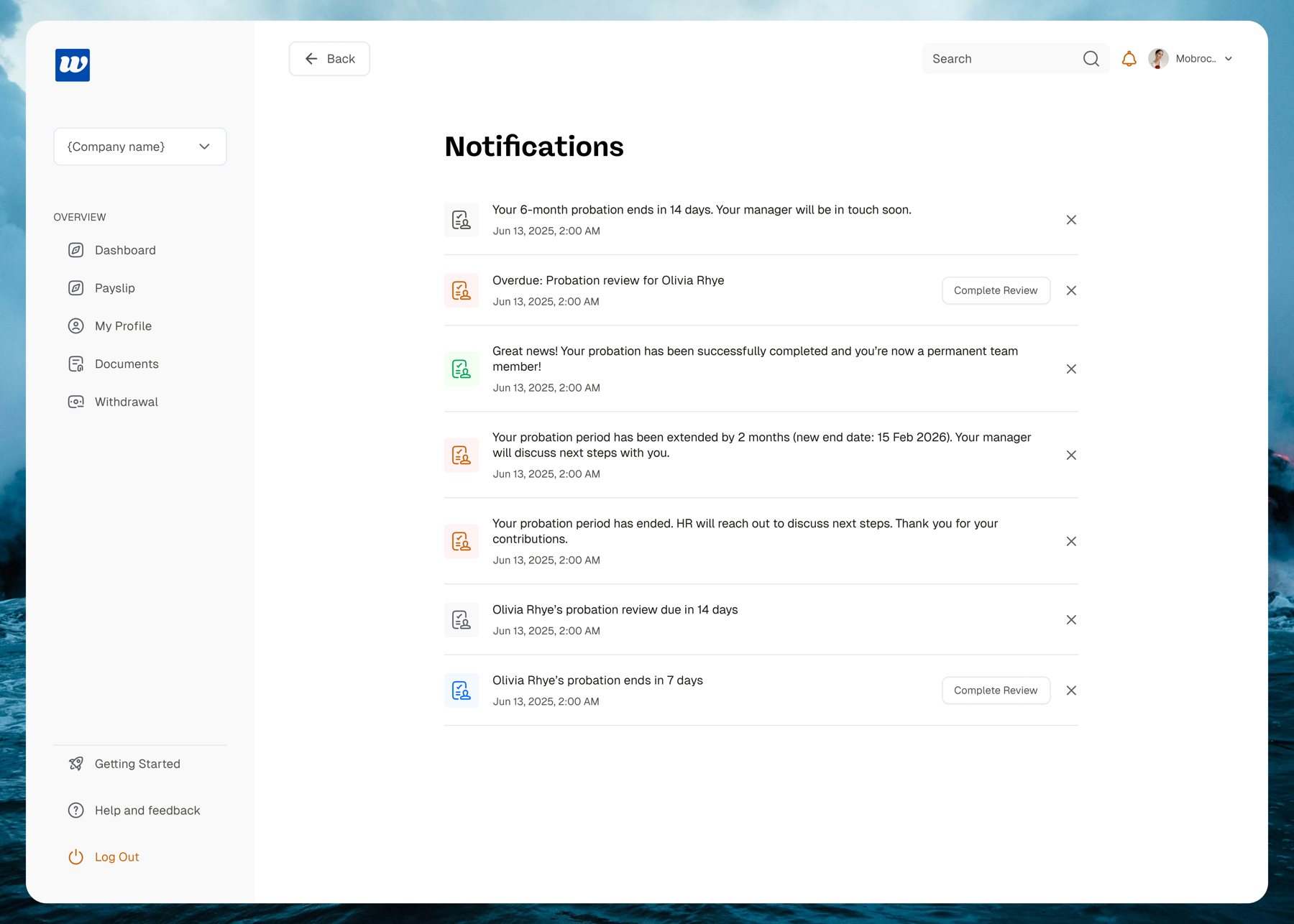
Probation was the first flow we built notifications around. Employees hear when their probation is ending, extended or complete; managers and HR are reminded before reviews are due and nudged when they are overdue. Each notification carries its own next step, such as completing a review or sending a reminder, so people can act without hunting for the right page.
The pieces in between
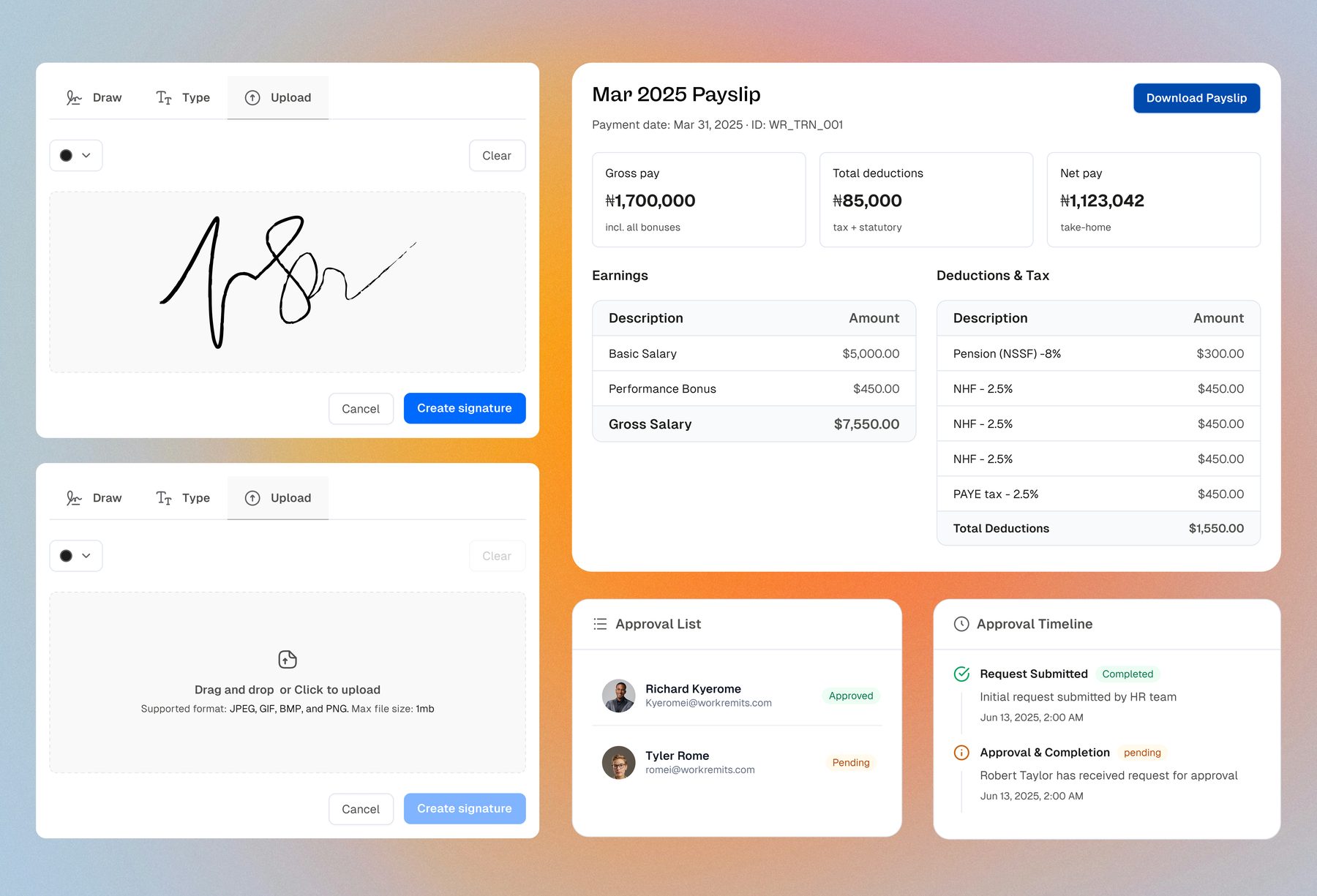
A lot of the product lives in small, careful moments: signing contracts, approvals that show who did what and when, payslips that are easy to read, and charts that make headcount and payroll easy to compare across regions.
One system, from Figma to code
I documented WorkRemit's design system from the live codebase, so design and engineering work from the same source of truth.
From there, I bring the codebase into Claude to explore ideas and build working prototypes that use the real components and patterns. We test those prototypes with users, and the front-end team builds from them and commits the final work to the product. It keeps design decisions close to the real product and closes the usual hand-off gap.